Conference Learning Architecture Framework
TM
Design the conference before you build the schedule.
A conference can feature excellent speakers, compelling topics, and engaging sessions and still feel like a collection of disconnected experiences.
The Conference Learning Architecture Framework™ (CLAF™) is a structured approach to conference planning that helps organizers create coherence across the entire conference experience.
Rather than beginning with speakers, topics, or individual sessions, CLAF™ begins with a more fundamental question:
What should this conference accomplish?
From there, the framework creates a clear line of alignment from the conference’s overall purpose to its strands and individual sessions. The result is a conference designed as an intentional learning experience, not simply a schedule of events.
A Three-Level Learning Architecture
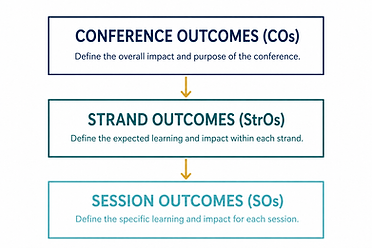
CLAF™ organizes conference planning across three connected levels:
-
Conference Outcomes (COs): Define the overall impact and purpose of the conference.
-
Strand Outcomes (StrOs): Define the expected learning and impact within each conference strand.
-
Session Outcomes (SOs): Define the specific learning and impact individual sessions are intended to deliver.
Conference Outcomes guide Strand Outcomes, and Strand Outcomes guide Session Outcomes. In the other direction, sessions provide experiences that support Strand Outcomes, while strands collectively contribute toward the broader Conference Outcomes.
Coherence Without Uniformity
CLAF™ is not designed to make every strand or session look the same.
Not every strand needs to address every Conference Outcome. Instead, each strand supports at least one Conference Outcome, while the conference architecture collectively ensures that all Conference Outcomes are supported somewhere within the experience.
The same principle applies to presenters. Organizers own the architecture. Presenters own the design of their sessions.
CLAF™ establishes shared direction while preserving the expertise, creativity, and autonomy presenters bring to the conference.
More Than a Planning Framework
CLAF™ supports the conference from initial planning through post-conference evaluation.
The accompanying CLAF™ Toolkit provides practical tools for defining conference and strand outcomes, inviting and evaluating session proposals, supporting selected presenters, reviewing alignment across the conference, evaluating the attendee experience, and identifying priorities for future conferences.
This creates a continuous process:
Define → Translate → Invite → Select → Design → Review → Deliver → Evaluate → Improve
Evaluation findings can then inform the next planning cycle, allowing conference teams to use evidence from one conference to strengthen the next.
The Goal
CLAF™ helps conference teams move from a collection of topics, speakers, and sessions to an intentionally designed, outcome-aligned learning experience.
Define the impact.
Align the architecture.
Protect presenter autonomy.
Evaluate what happened.
Use the evidence to improve what comes next.